
A rough opening in an existing concrete area is not finished by simply filling the space. The retained edges, exposed soil, base, placement, and surface finish all affect the handoff. This documented AWC project shows how a localized opening moved from an irregular demolition area to a defined, broom-finished concrete closure.
The problem was a rough opening beside retained work
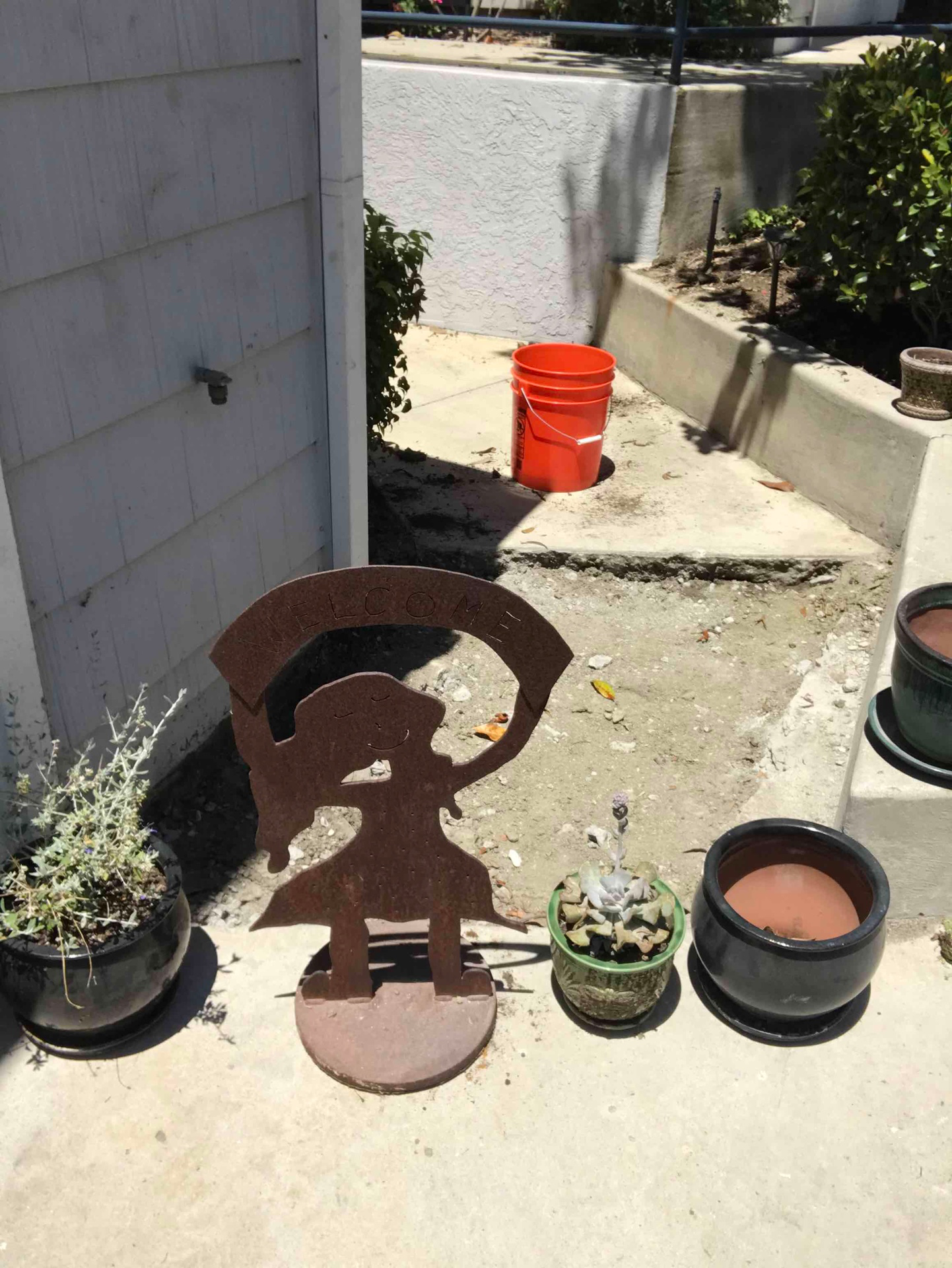
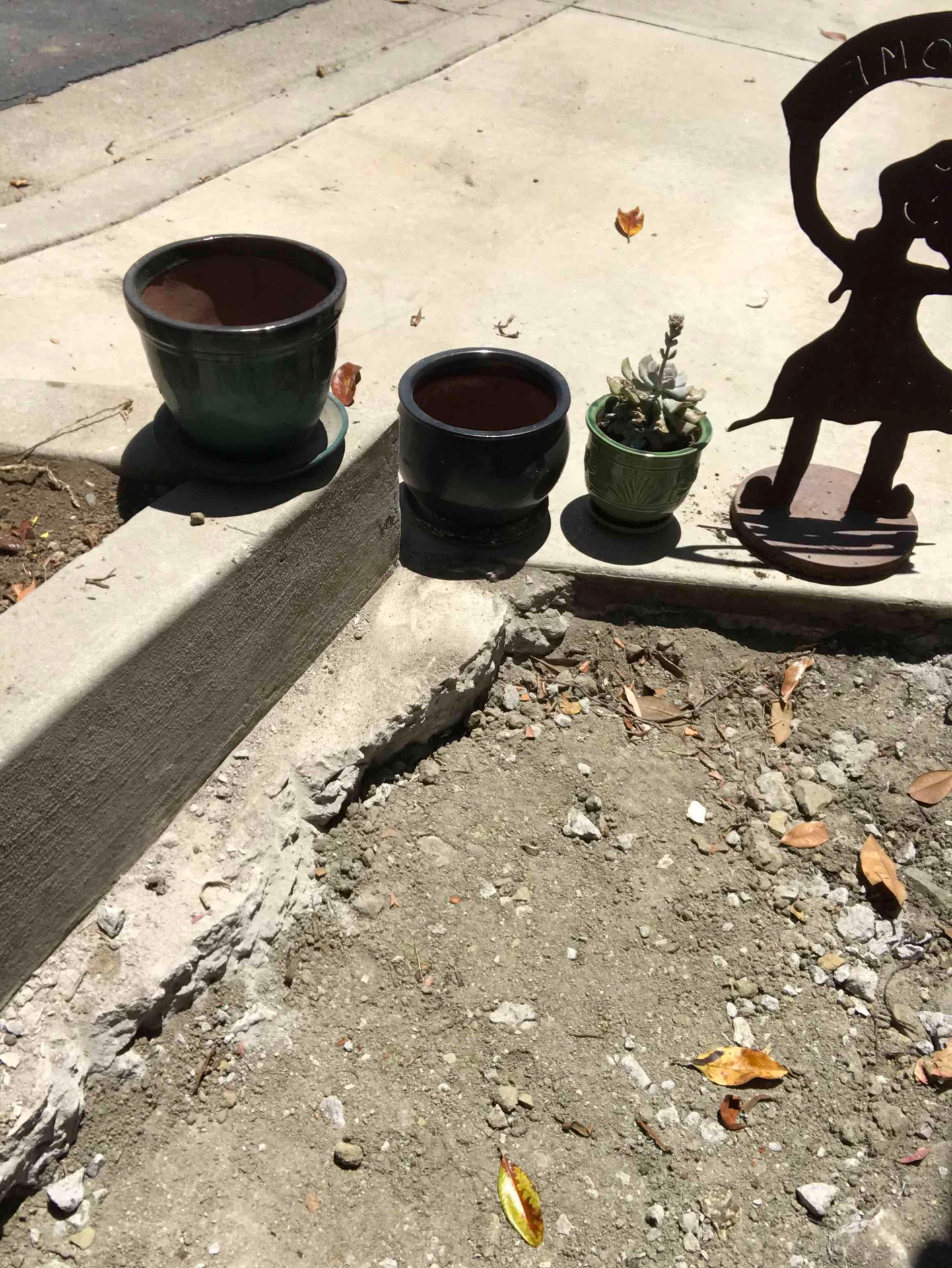
The before photographs show an open section within an existing paved area, next to a wall or curb and a raised retained concrete edge. Loose soil and demolition remnants were visible inside the opening. That condition created two clear tasks: prepare a workable perimeter without damaging the surrounding surfaces, and rebuild the removed section from the exposed ground up. Looking at the wider area mattered because the finished concrete had to meet existing construction on several sides rather than behave like a freestanding pour.
AWC defined and cleaned the restoration boundary
The work note called for protruding demolished concrete to be removed or ground down and for the perimeter to be ground into clean lines. This step turned an irregular opening into a deliberate repair area. Edge preparation gives the crew a clear placement limit and helps everyone see which concrete remains. It also makes finish expectations easier to discuss before fresh material arrives. On another property, the selected boundary could change with joints, slab thickness, embedded items, access, or the condition exposed during preparation.
The base was rebuilt as its own stage
After the perimeter work, the documented sequence called for grading the soil, installing angular gravel, and compacting it. Treating those as separate actions matters. “Fill the opening” does not explain who establishes the grade, what material is placed below the concrete, or when the base is ready for the next operation. No intermediate base photograph is included in this public example, so those steps come from the written work record. A current project should state its project-specific base requirements and changed-condition process in the approved scope.
Placement included edges and a broom finish
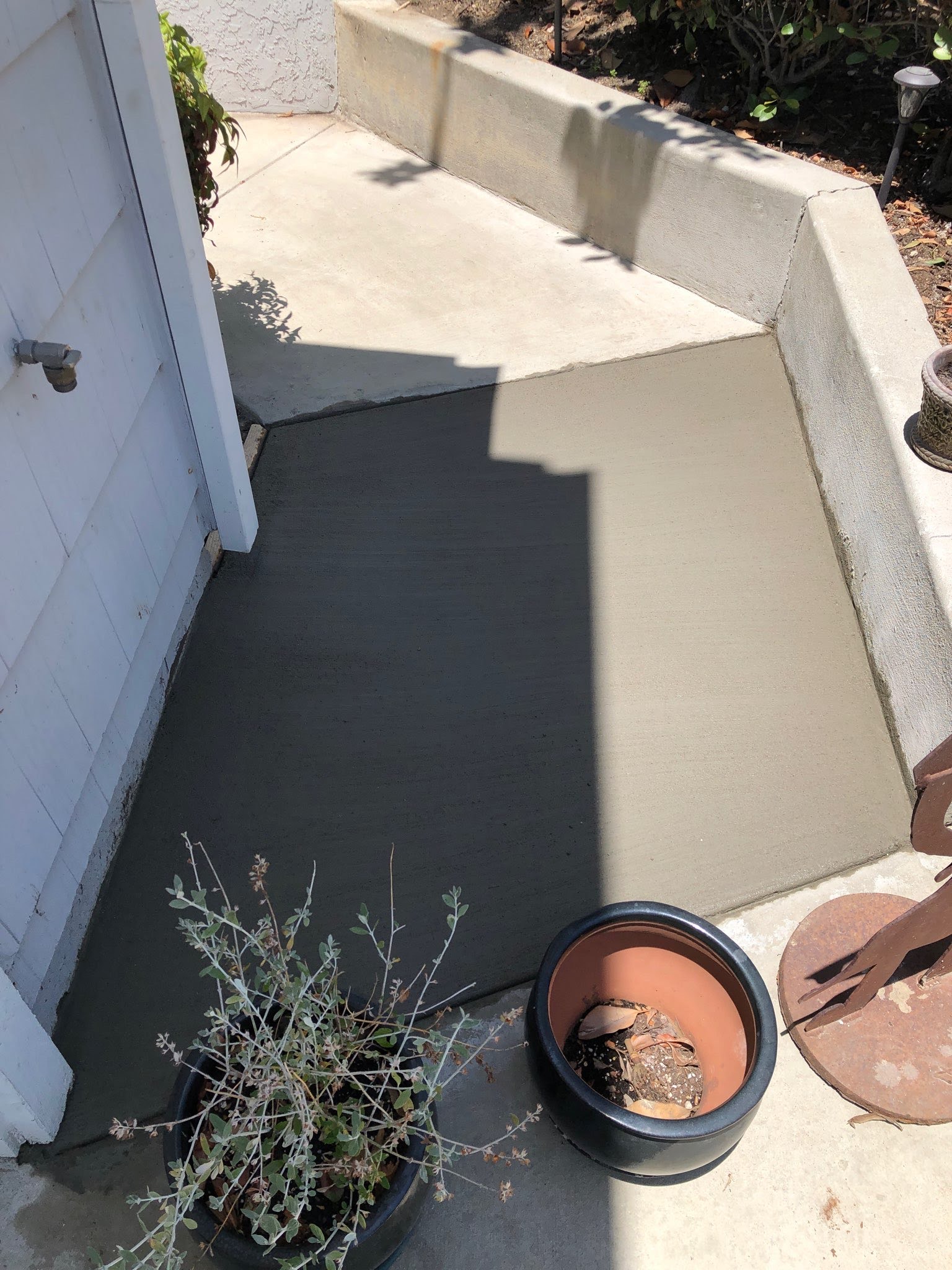
The crew then mixed and placed concrete, edged three sides, floated and screeded the surface, and applied a broom finish. The after-placement photograph shows the localized area filled, with visible perimeter transitions and a broom-textured surface beside the retained construction. The result reads as a defined repair rather than an unfinished access hole. New concrete can still differ from older material in color, texture, wear, and weathering, so the practical finish and transition should be discussed before work instead of judged against an unqualified promise to disappear.
The owner lesson is to connect every handoff
This sequence gives owners a useful checklist for similar work. Confirm why the area is open and who releases any underlying trade before closure. Mark the concrete boundary and retained service points. Assign soil or base preparation, material sourcing, concrete placement, finish, protection, and adjacent restoration. Record what happens if preparation exposes a different edge or assembly. At closeout, connect the trade record, concrete scope, photographs, finish review, and remaining items by location. This San Diego County example documents concrete restoration; the images show before and after placement, not underground trade work, curing, or reopening.