Ready to close?
Confirm the originating trade released the opening and identify any review still pending.

All World Construction · Carmel Valley
An open slab or rough patch should have a clear path to completion. AWC connects the trade handoff, concrete replacement and adjoining finishes in one written scope.
Call 619-327-9513 ↗A useful first messageSend the opening, surrounding surface and what the utility contractor has completed.
See the opening-to-concrete work stages →Start with what you see
Confirm the underlying trade is released, the closure limit is marked, and retained access stays usable.
Find the next step ↗Compare a tight repair with a wider replacement using the same visible conditions and exclusions.
Find the next step ↗Plan vehicle use, drainage observations, work access, protection, and project-specific reopening direction.
Find the next step ↗Assign concrete texture, coatings, flooring, stucco, paint, landscape, protection, and punch work.
Find the next step ↗One contractor for the connected repair: All World Construction LLC · Meet AWC · Check CSLB #1063936
An AWC owner article
An AWC owner guide to recording water paths, loads, transitions, access, removal, base, finish, cure protection, vehicle restrictions, and closeout.
Before the opening disappears
A plumbing or electrical repair can leave a necessary opening in a slab, walk, patio, or equipment pad. Before it is closed, confirm who released the concealed work, where concrete replacement stops, what adjacent finishes are affected, and which items remain for another trade.
Confirm the originating trade released the opening and identify any review still pending.
Mark the concrete limit, retained edges, joints, penetrations, and surfaces that remain.
Separate concrete texture from coatings, flooring, stucco, paint, and landscape follow-up.
Keep stage photos, trade records, change approvals, and a remaining-work list.
Documented AWC work · San Diego County
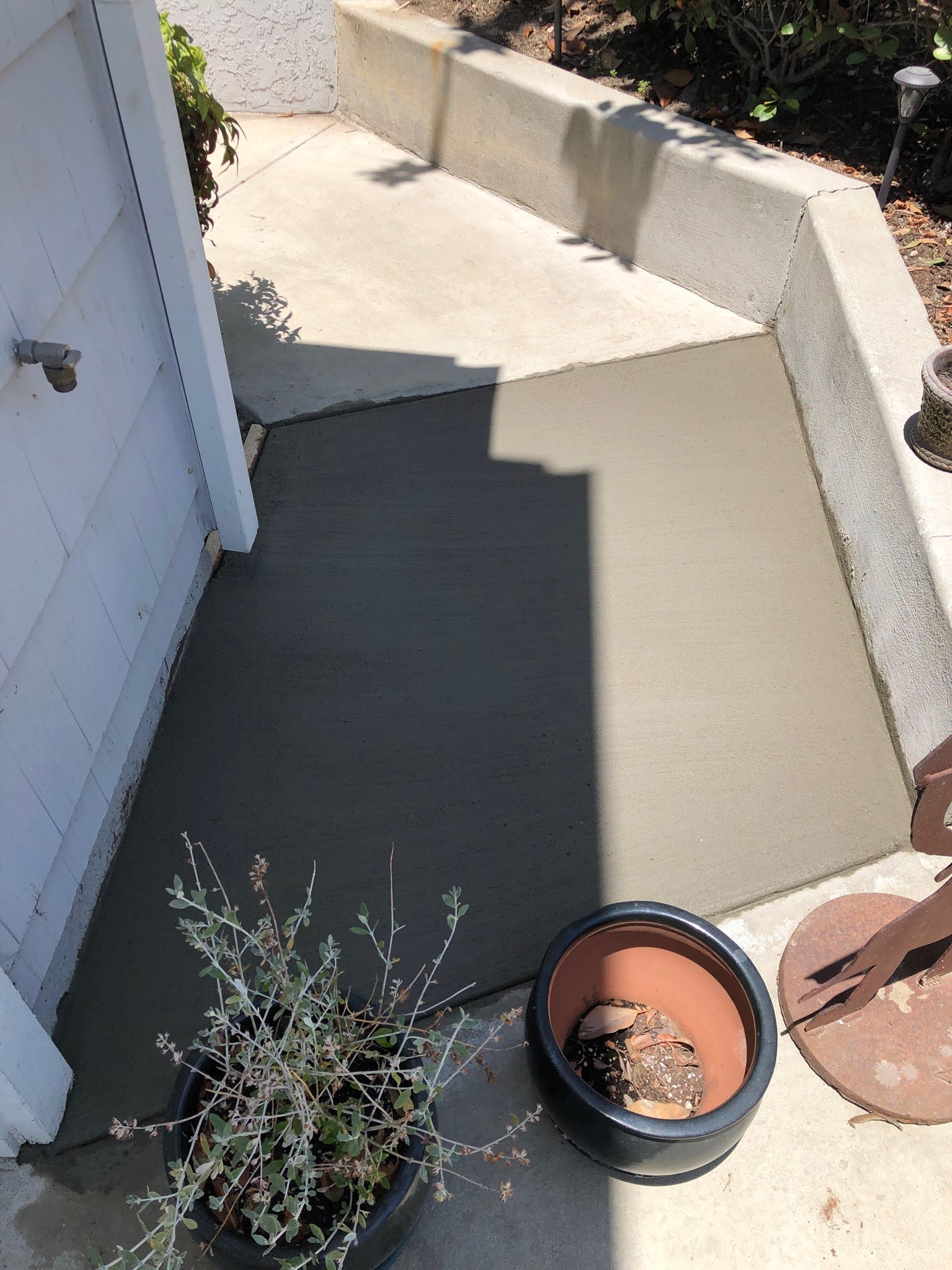
A documented AWC concrete restoration project in San Diego County.
The work record follows perimeter preparation, grading, gravel placement and compaction, then concrete placement and broom finishing.
The photos show before and after placement. Base preparation is documented in the work note; curing and reopening are outside this photo sequence.
See all three case photos ↗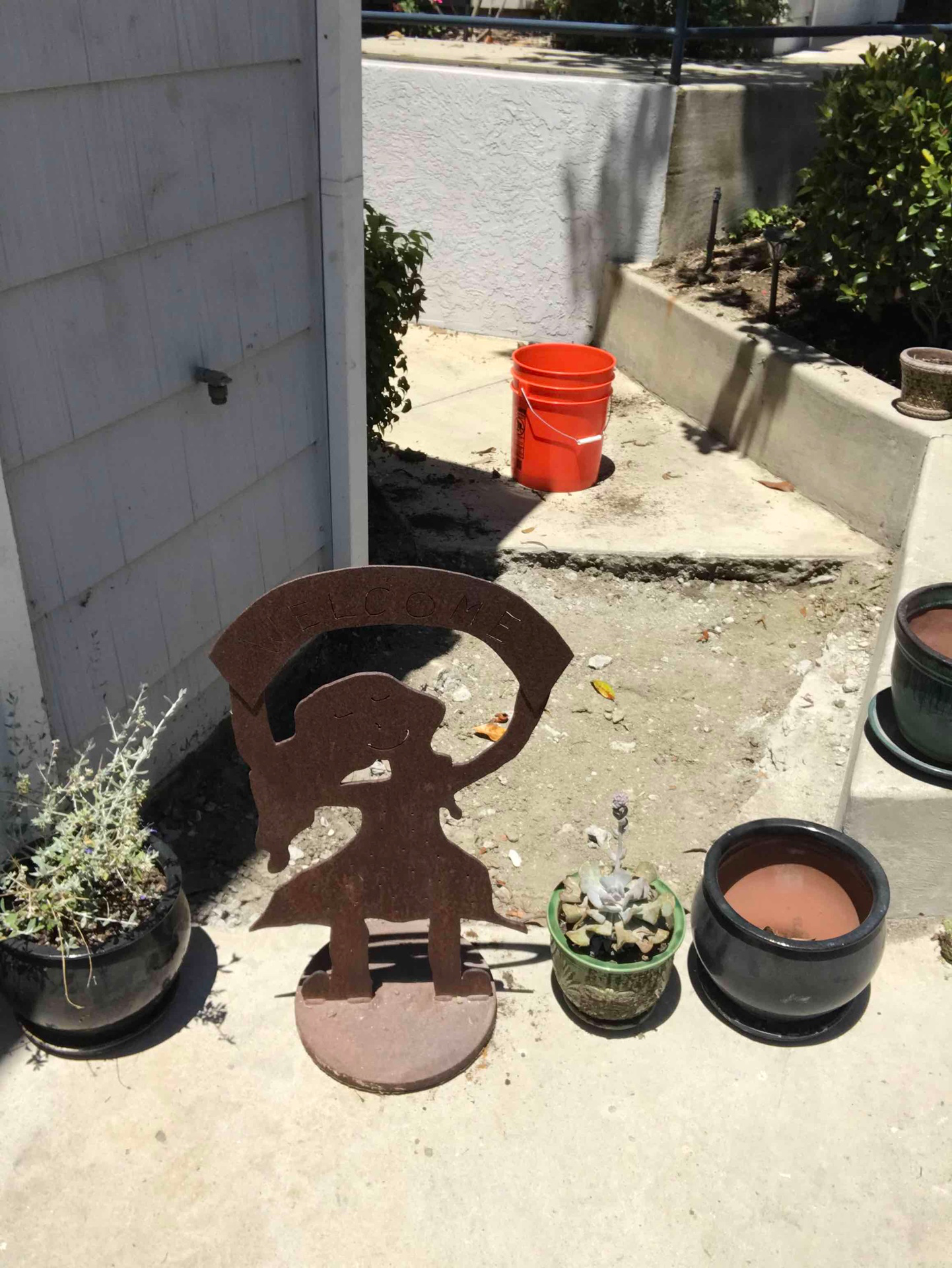
When site verification is needed
When an opening, concealed condition, related trade, access limit, or finish boundary needs field verification, AWC may recommend the $250 Site Evaluation + Written Bid Package. The fee is credited back if the proposed work is approved within 30 days.
Send wide and close photos of the opening, the reason for access, current trade status, nearby joints and finishes, and who can approve the next stage.
Connect the original access work, required records, physical boundary, and approval to cover the area.
Read the guide ↗Compare a tight closure and wider replacement using retained edges, joints, use, and finish transitions.
Read the guide ↗Transfer completion, retained access, protection, fill, restoration, communication, and change authority.
Read the guide ↗Define texture, transition, coating, adjoining finish, protection, and punch responsibilities.
Read the guide ↗Connect the access need, trade record, concrete, adjacent finishes, punch work, and remaining responsibilities.
Read the guide ↗Real field context and useful reading from All World Construction.
Watch AWC at work · Separate project
A short AWC jobsite video shows conduit routed toward a kitchen island. Use it to see why access and restoration need to be planned together.
Watch the AWC video on YouTube ↗Running conduit to kitchen island #concrete · This is a separate project from the featured concrete-opening case study.
AWC reading
General AWC context for investigation, scope boundaries, connected trades, documentation, and closeout; not a concrete installation guide.
AWC reading
Questions about approval authority, occupied-property coordination, written updates, and closeout; current terms remain controlled by the project proposal.
AWC reading
Planning context for access, timing, repair lists, and adjoining finish responsibilities.
Only after the responsible trade and any applicable reviewer release the opening under the actual scope.
New work can remain visibly different. State the intended texture, boundary, and later-finish responsibility.
Only the items and limits named in the approved scope.
When the opening, concealed condition, access, related trades, or finish limits need field verification.
New owner guide
Will a concrete coating fix water pooling on my patio? A finish coating does not correct a patio's drainage geometry. First establish where the water comes from, the surface elevations and the intended discharge path. A suitable repair may involve surface drainage, grading or a defined concrete replacement; the choice follows the site findings. A new finish should not hide an unresolved water problem.
Read the guide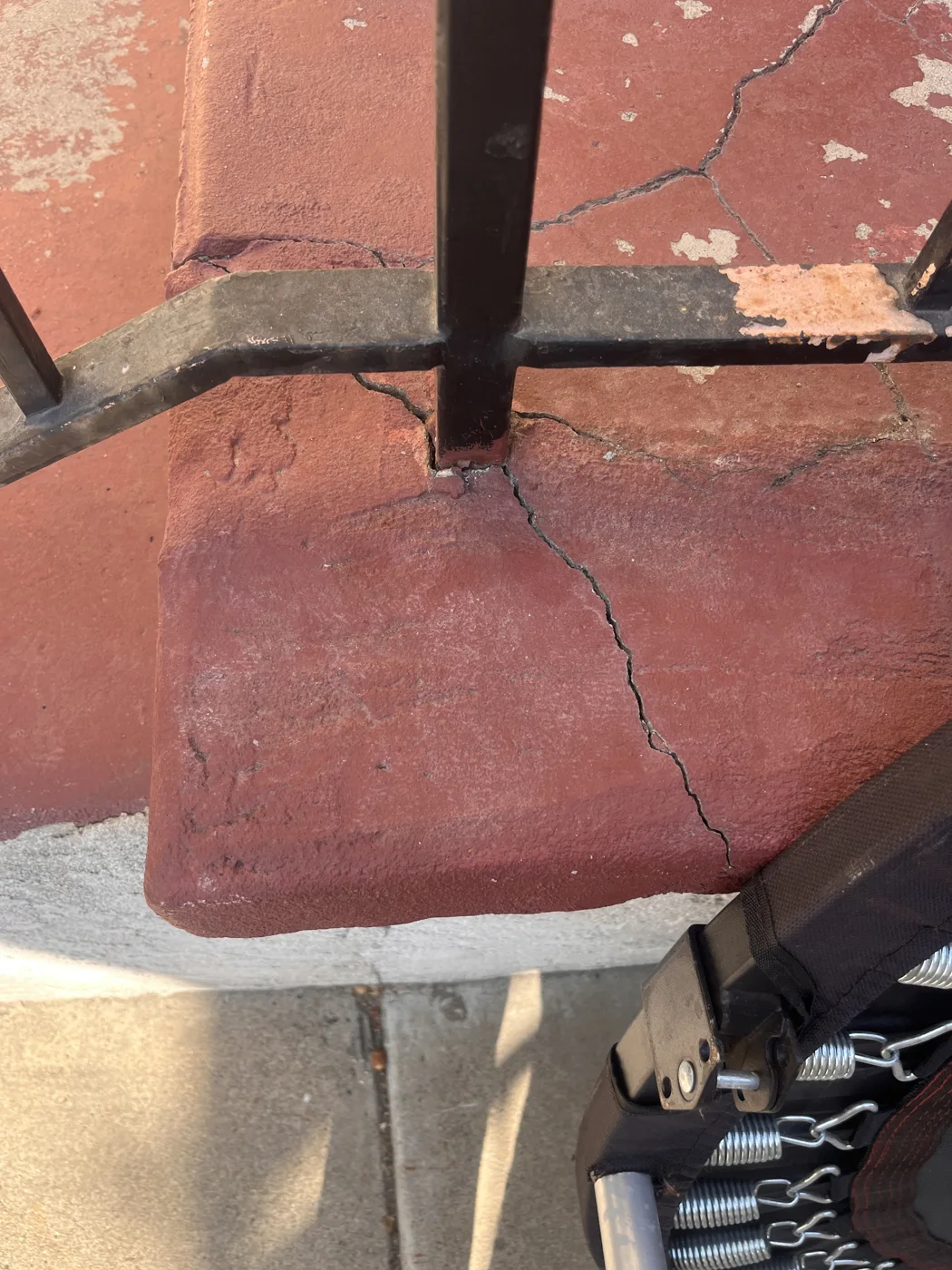
Authentic AWC field example
A concrete patch can leave coating and railing responsibilities unresolved. A written handoff should identify each remaining trade.
This shared AWC work example shows damaged corners, preparation, patching, and a resurfaced top before paint. The job location is not identified as Carmel Valley.
See the repair sequence, photos, and field video
Railing and post repairs remain a separate required scope.
Start with a conversation
Carmel Valley · Concrete · AWC