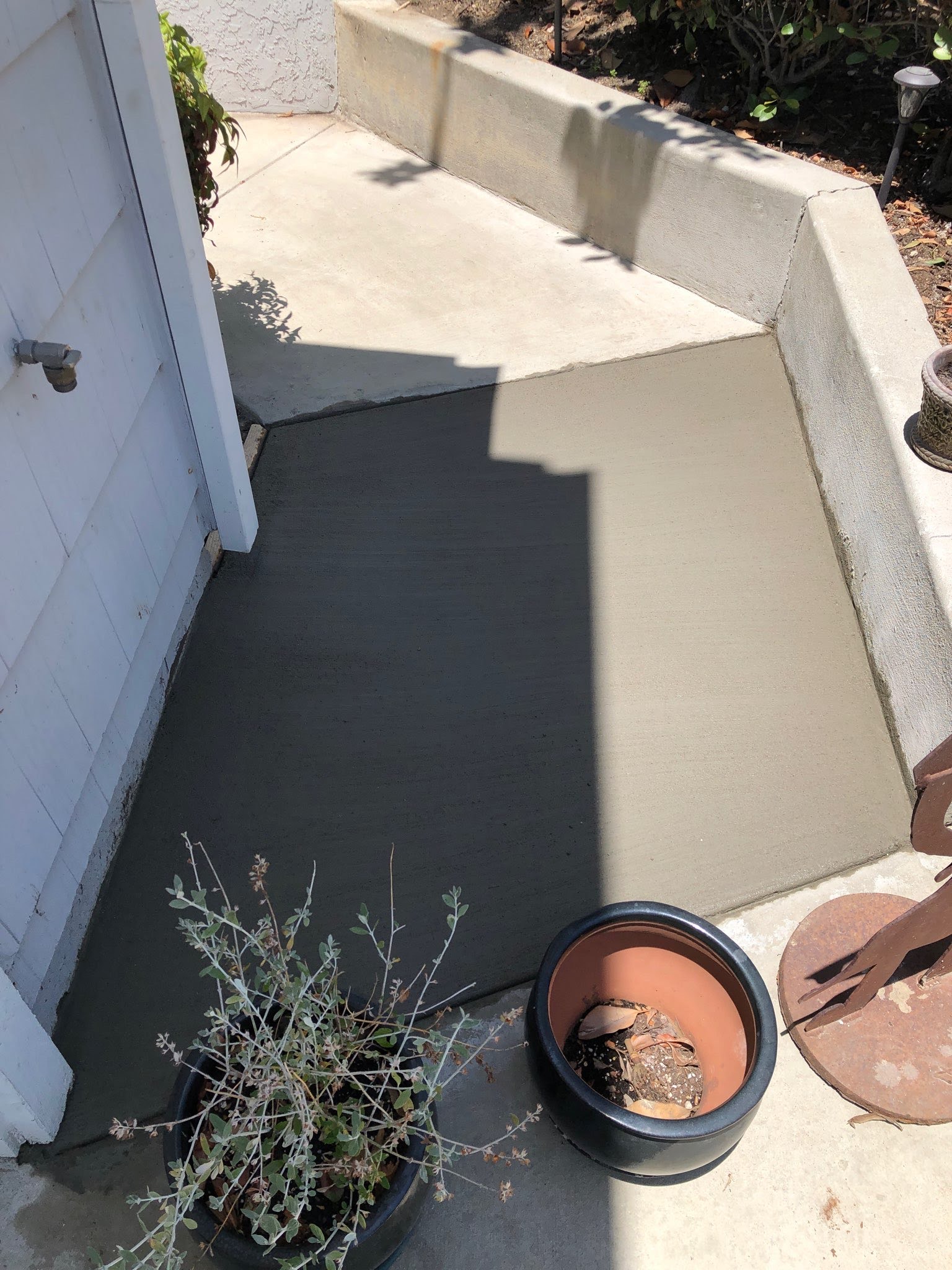
Concrete placement and a finished-looking property are different milestones. Texture, color variation, coatings, flooring, stucco, paint, landscape, and cleanup need specific owners and boundaries.
Describe an observable finish
Name the intended surface treatment, joint layout, edge condition, and practical reference area instead of relying on “match existing.” Existing concrete may be aged, stained, worn, coated, or from another placement. A sample can guide texture but cannot guarantee identical color or weathering. State whether the repair will remain visibly distinct and who reviews it while a useful correction may still be possible.
Treat coatings as separate work
Paint, sealer, traffic coating, topping, adhesive, and flooring may require preparation beyond new concrete and product-specific moisture or cure conditions. Identify area, preparation, product responsibility, color selection, stages, and applicable manufacturer requirements. If the existing product is unknown or compatibility unverified, record that. Do not promise a coating will hide movement, eliminate every transition, or correct an unknown condition.
Map every affected finish
Walk beyond the concrete edge. List baseboards, drywall, stucco, waterproofing, tile, cabinets, doors, trim, paving, irrigation, soil, and planting. Mark each included, protected and retained, restored, owner-supplied, assigned elsewhere, or excluded. Pre-work photographs should show interfaces. This prevents a small closure from leaving an unresolved wall strip, missing floor transition, disturbed planter, or unassigned paint area.
Plan protection and reopening by stage
Demolition, base work, placement, curing, coating, and finish work affect access differently. State which routes close, how retained surfaces are protected, who controls occupants and deliveries, and which direction governs reopening. Product instructions, actual conditions, and the scope control timing. Avoid universal promises about foot traffic, vehicles, water, or coating readiness. Communicate changes before another trade relies on the area.
Close appearance and function separately
Review concrete against its boundary, joints, surface, edges, and documented requirements. Review coatings and adjacent finishes against separate scopes. Record punch items by location and owner. A color concern does not itself prove a functional defect, and completed placement does not approve paint, flooring, landscape, or concealed work. Closeout should show accepted work, remaining items, exclusions, supplied care information, and separately proposed improvements. Resolve texture, color, coating, and transition selections before their work stage. If a selected system changes curing, moisture, substrate, access, or protection requirements, revise the affected scope and sequence rather than leaving that decision to the application crew.
Finish responsibility list
- Location or opening ID
- ________________
- Observed or documented fact
- ________________
- Responsible party
- ________________
- Current status
- ________________
- Approval or next step
- ________________
- Photo or record reference
- ________________
Before approval
Approve the finish package only when concrete texture, coatings, adjacent surfaces, selections, stage protection, reopening direction, and punch responsibility are separately stated.
- Finish description
- Reference or sample
- Visible transition
- Coating and boundary
- Adjacent finishes
- Protection
- Reopening
- Punch owner
Common question
Is coating included with a patch?+
Only when the scope identifies the system, preparation, area, selection responsibility, and application.
Can new concrete exactly match old concrete?+
Age, wear, materials, and exposure can leave a visible difference.
Related AWC context
Rental Turnover Repairs: What To Check Before The Unit Sits Empty
Separating concrete completion from adjacent finish and property-readiness work.
Procrastinating Maintenance - Where to start:
Prioritizing observed conditions and next decisions without unsupported diagnosis.