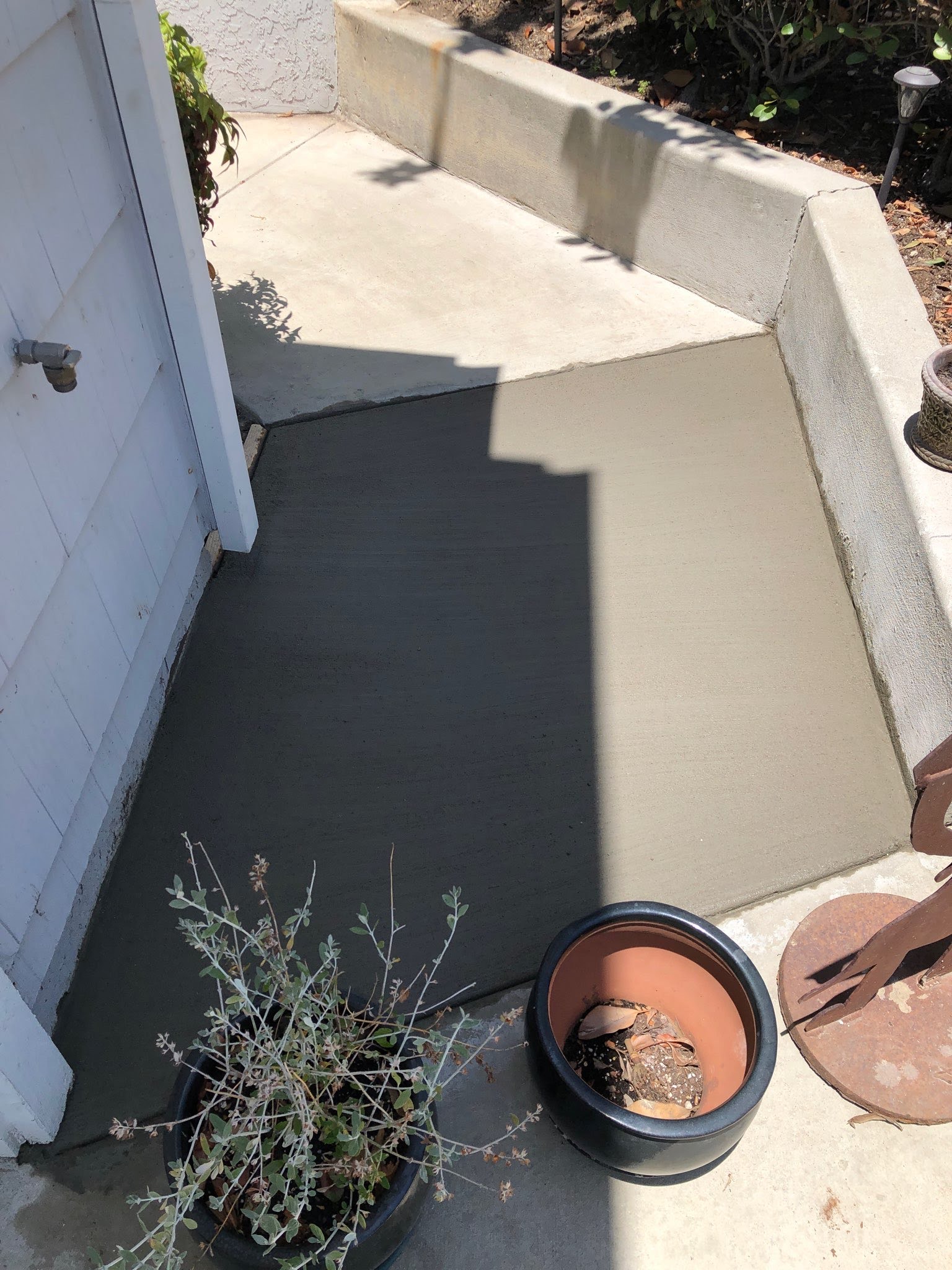
A smooth surface does not prove every concealed or adjacent task is complete. Useful closeout follows the opening from the original reason for access through each responsible trade and the final visible area.
Reconcile final work with scope
Start with the opening identifier and original request. List approved underlying work, closure boundary, concrete, adjacent finishes, alternates, and changes. Mark each completed, pending, excluded, recommended, or assigned elsewhere. This prevents “job complete” from erasing a coating, landscape, inspection, owner decision, or follow-up. If the final boundary differs, include its approved revision and marked record.
Organize evidence by stage
Arrange context, open-area, pre-closure, concrete, finish, and final photographs by location and date. Add applicable work notes, trade releases, inspection records, product information, and changes. Describe each only for what it supports. A photograph does not prove concealed performance; an invoice does not prove acceptance; an inspection does not cover unrelated finishes. Remove private and security details from public summaries.
Review the affected zone
Walk concrete, retained edges, joints, penetrations, walls, thresholds, transitions, access route, staging, and affected landscape or interior finishes. Compare each to the scope and pre-work record. Note cleanup and protection removal. This is a scope review, not a promise that unrelated or concealed conditions were evaluated. If correcting one scope disturbs another, coordinate it before assigning the punch item.
Separate completion and later care
Record when each contractor reports an item complete, who receives it, and any response required by the agreement. Provide project-specific restrictions, instructions, maintenance information, or warranty documents that apply. Do not replace records with a broad safety or compliance claim. List monitoring, later coating, landscape establishment, product registration, and return visits under the person responsible.
Deliver one readable index
Index the opening number, original issue, scopes, changes, trade record, closure release, concrete completion, finish completion, photos, applicable inspection documents, product information, punch disposition, recommendations, exclusions, recipient, and date. Owners should not reconstruct the sequence from texts. A concise index makes future service easier while keeping every contractor’s claims within the work and evidence provided. Store it where the owner or manager can retrieve it, using ordinary location labels instead of private entry data. Note retained cleanouts, covers, joints, and service points that should remain identifiable. Future contractors can then find the project record without treating a public article as property documentation.
Stage photo index
- Location or opening ID
- ________________
- Observed or documented fact
- ________________
- Responsible party
- ________________
- Current status
- ________________
- Approval or next step
- ________________
- Photo or record reference
- ________________
Before approval
Accept closeout when the final boundary, trade records, concrete and finish reviews, changes, punch disposition, remaining work, and document recipient are reconciled in one index.
- Original request
- Approved scopes
- Final boundary
- Trade release
- Stage photos
- Concrete review
- Finish review
- Changes
- Punch disposition
- Remaining items
- Recipient
Common question
Do photos prove everything beneath the repair?+
No. They document visible stages; trade records address the work they cover.
Is concrete complete the same as project complete?+
Only if every other included trade, finish, punch, and handoff is closed.
Related AWC context
Behind AWC: The Part of Contracting You Don't Usually See
Scope boundaries, coordination, documentation, and closeout.
Common Questions Property Managers Ask a General Contractors
Approval authority, scope comparison, communication, and closeout for managed properties.
Procrastinating Maintenance - Where to start:
Prioritizing observed conditions and next decisions without unsupported diagnosis.